DAC vs Amp: Which Audio Upgrade Should You Buy?
4/30/2026 · Audio · 8 min read
TL;DR
- A DAC (digital-to-analog converter) converts digital files into an analog signal — it improves clarity and reduces noise.
- An amp (amplifier) increases the power of that analog signal — it lets you drive demanding headphones to proper volume.
- If your audio sounds thin or noisy, you probably need a better DAC. If it sounds clean but too quiet, you need more amplification.
- Most people benefit from a combo DAC/amp unit in the $100–$200 range.
- Separate DAC and amp (a "stack") only makes sense above roughly $300 total budget, where component quality starts to diverge.
- Built-in audio on modern laptops and phones is decent for easy-to-drive earbuds — don't upgrade until you actually hear a problem.
What a DAC actually does
Every digital audio file — whether it is a Spotify stream, a FLAC download, or a game's sound effects — is just a series of numbers. Before those numbers can move your headphone drivers and reach your ears, something has to turn them into a continuous electrical waveform. That something is a DAC.
Every device that plays audio already contains a DAC. Your phone has one, your laptop has one, and your TV has one. The question is never "do I need a DAC?" but rather "do I need a better DAC?" A dedicated external DAC typically offers lower noise floor, better channel separation, and support for higher-resolution formats (24-bit / 96 kHz and above).

What an amp actually does
Once a DAC has created an analog signal, that signal is usually too weak to drive a pair of full-size headphones. An amplifier takes the low-level signal and increases its voltage and current so it can push headphone drivers with authority.
Amplifiers matter most for headphones with high impedance (above 80 Ω) or low sensitivity (below 100 dB/mW). Planar-magnetic headphones like the HiFiMAN Sundara or Audeze LCD-2 are classic examples: they sound lifeless from a phone's headphone jack but come alive with a proper amp delivering clean power.
Signs you need a DAC upgrade
Not every setup needs an external DAC. Here are the symptoms that suggest yours is the weak link:
- Audible hiss or static when nothing is playing, especially from a laptop's 3.5 mm jack.
- Interference noise that changes when you scroll, move the mouse, or load a webpage — this is electrical noise from the motherboard leaking into the audio path.
- Thin or "digital" sound compared to the same headphones plugged into a friend's better source.
- Truncated format support — your device maxes out at 16-bit / 48 kHz but you have a library of hi-res files.
If your audio sounds clean and full but just not loud enough, a DAC upgrade alone will not fix the problem.
Signs you need an amp upgrade
Amp deficiency shows up differently:
- Volume maxed out on your device and the sound is still not loud enough.
- Dynamics feel compressed — quiet passages and loud passages seem to sit at the same level, with no punch on transients.
- Bass sounds loose or distorted at higher volumes, even though the headphones are well-reviewed.
- Channel imbalance at low volume — you have to turn the dial up past 30 % before both ears are equally loud (a common analog potentiometer issue in weak sources).
If your headphones are easy-to-drive IEMs (under 32 Ω, over 110 dB sensitivity), you almost certainly do not need a separate amp.

Combo units vs. separate stacks
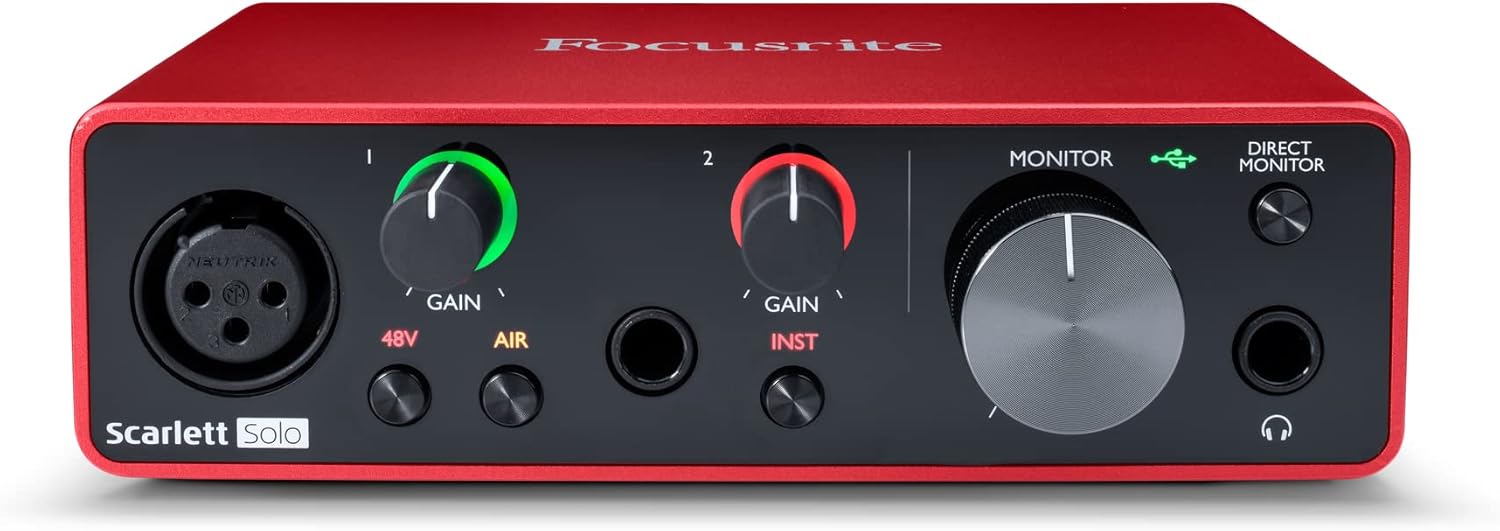
The most common entry point is a combo DAC/amp — a single box that handles both conversion and amplification. These are convenient, compact, and usually cheaper than buying two separate components.
A separate stack (standalone DAC feeding a standalone amp via RCA or balanced cables) gives you more flexibility: you can upgrade each piece independently, mix solid-state and tube amps, or swap DAC chips to taste. But the benefits only become meaningful at higher budgets where component quality genuinely diverges.
| Feature | Combo unit | Separate stack |
|---|---|---|
| Typical price | $50–$300 | $200–$1,000+ |
| Desk space | Minimal (one box) | Moderate (two boxes + cables) |
| Upgrade path | Replace entire unit | Swap one component at a time |
| Cable clutter | USB in, headphone out | USB in, interconnects, headphone out |
| Best for | Beginners, desk setups, portability | Enthusiasts, multiple headphones, tube rolling |
Budget picks under $100
At this tier, combo units dominate. The Apple USB-C dongle ($9) is the cheapest legitimate DAC/amp and measures remarkably well — it cleanly drives anything under 40 Ω. The Meizu HiFi Pro and Truthear SHIO occupy a similar niche with slightly more power.
For a desktop unit, the Fiio E10K and Topping DX1 sit around $75–$85 and deliver enough power for most dynamic headphones up to 150 Ω. At this price, do not overthink it — the differences between well-measuring units are smaller than the difference between any of them and a noisy laptop jack.
Mid-range picks $100–$300
This is where separate stacks start to make sense. A popular pairing is the Topping E30 II DAC ($130) with the Topping L30 II amp ($130). Together they measure near the limits of human hearing and deliver enough power for virtually any headphone on the market, including 300 Ω Sennheiser HD 800 S.
Combo alternatives like the iFi Zen DAC V2 ($200) and Fiio K7 ($200) offer balanced output in a single chassis, which is attractive if your headphones have a balanced cable.
High-end considerations above $300
Above $300, you are paying for specific sonic flavors, build quality, and features rather than raw measured performance. R-2R DACs like the Schiit Bifrost 2 offer a different tonal character than delta-sigma chips. Tube amps like the Darkvoice 336SE or xDuoo TA-26 add harmonic warmth that pairs beautifully with bright headphones.
At this level, synergy between your DAC, amp, and headphones matters more than any single component. Auditioning before buying — or buying from retailers with return policies — is strongly recommended.

Common mistakes to avoid
The audiophile rabbit hole is deep, and marketing does not help. A few frequent missteps:
- Buying an amp for IEMs. Sensitive in-ear monitors can actually sound worse with a powerful amp due to increased noise floor and channel imbalance at low gain.
- Chasing specs over listening. A DAC with 130 dB SINAD does not automatically sound better than one with 115 dB SINAD — both are well beyond the threshold of audibility.
- Ignoring the headphones. The single biggest upgrade for most people is better headphones, not a better source chain. A $200 headphone from a $9 dongle will almost always sound better than a $50 headphone from a $200 DAC/amp.
- Forgetting software settings. Windows audio resamples everything to your system sample rate by default. Setting exclusive mode or using WASAPI/ASIO can matter more than swapping hardware.
Desktop vs. portable setups
Desktop DAC/amps plug in via USB, sit on your desk, and power full-size headphones. They prioritize output power and connectivity (multiple inputs, pre-amp outputs for speakers).
Portable DAC/amps — dongles and battery-powered units like the Qudelix-5K or Fiio BTR7 — prioritize size and Bluetooth connectivity. They are ideal for commuters who want to use wired IEMs with a phone that has no headphone jack. Do not expect them to drive 300 Ω headphones.
How to decide: a quick flowchart
Ask yourself three questions in order:
- Do I hear noise, hiss, or interference from my current source? → Yes: get a DAC (or combo). No: move to question 2.
- Is my volume maxed out or do dynamics feel flat? → Yes: get an amp (or combo). No: move to question 3.
- Am I happy with my sound? → Yes: save your money. No: upgrade your headphones first.
If you answered yes to both questions 1 and 2, a combo DAC/amp is the most cost-effective single purchase.
Bottom line
DACs and amps solve different problems, and buying the wrong one is the most common mistake in the headphone hobby. Start by diagnosing whether your issue is noise and clarity (DAC territory) or power and dynamics (amp territory). For most people stepping into better audio, a $100–$200 combo unit paired with good headphones will deliver 90 % of what the hobby has to offer — and the remaining 10 % costs exponentially more to chase.
Found this helpful? Check our curated picks on the home page.